Hakone Onsen Guide: Best Areas, Hot Springs and Where to Stay
Affiliate disclosure: This post contains affiliate links. If you book through them, I may earn a small commission at no extra cost to you.
Most guides treat Hakone as one onsen town. It isn’t.
Hakone is a volcanic caldera, and it’s traditionally divided into 17 hot-spring areas, known collectively as the Hakone Seventeen Baths (箱根十七湯).
Spring composition varies considerably across the region. The mild, clear water at Yumoto is a very different bath from the milky sulphur water up near Owakudani, twenty minutes further up the mountain.
I live in the Kanto region and get to Hakone regularly, and this is the thing I’d most want a first-time visitor to understand: decide where you want to bathe before you decide where to sleep. Almost nobody does this, and it’s the single most useful piece of planning for a Hakone trip.
Here’s how the areas differ, and how to pick.
The Areas, and What the Water Is Like
Hakone-Yumoto — The Gateway
The first stop off the train from Tokyo, and Hakone’s largest and oldest hot spring town. It has been operating since the eighth century, and it’s still the busiest part of the region.
The water: mostly mild, clear, simple alkaline springs. Gentle on the skin, and often described as a “beauty bath” for its smoothing effect. If it’s your first onsen, this is an easy introduction.
The feel: lively and convenient. Shops, restaurants, and day-use baths right by the station. Busy even on weekdays.
Best for: first-timers, day trips, travelers who want convenience and don’t want to transfer further into the mountains.
Tonosawa and the Hayakawa Gorge
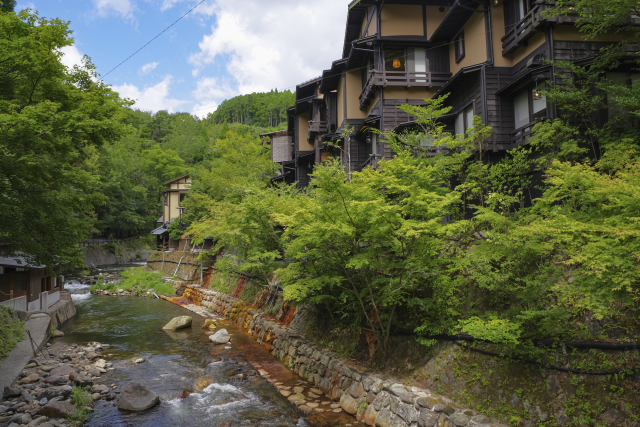
One stop up from Yumoto, and noticeably quieter. The valley areas along the Hayakawa river hold some of Hakone’s most atmospheric inns, and Japanese writers have historically come here for the quiet.
The water: similar to Yumoto, mild and soft.
The feel: secluded but still close to the station. A good middle ground.
Best for: travelers who want quiet without a long transfer. Several of the tattoo-friendly inns I’ve covered are in this area.
Gora — Up the Mountain
Gora sits higher up, at the end of the Hakone Tozan railway and the start of the cable car. It was a villa area for politicians and businessmen in the Meiji era, and it still has that quiet, residential feel with premium inns.
The water: Gora draws on several spring types, including sulphate and sodium chloride springs. Some of the higher districts receive sulphurous water piped down from Owakudani, which runs milky white and smells of it.
The feel: calm, upscale, a little removed. You’re properly in the mountains here.
Best for: travelers who want a quieter, more premium stay and don’t mind the transfer up.
Sengokuhara — The High Plateau
An open, grassy highland area, known for its silver pampas grass fields in autumn.
The water: sodium chloride springs, which hold heat well and keep you warm long after you get out.
The feel: rural and spacious, a real contrast to Yumoto or Gora. Quiet luxury inns, fewer crowds.
Best for: autumn visitors, and anyone who wants nature over convenience.
Lake Ashi (Ashinoko)
The lake at the heart of Hakone’s sightseeing, with the shrine torii standing in the water and the pirate ship cruises.
The water: varies by source around the lake.
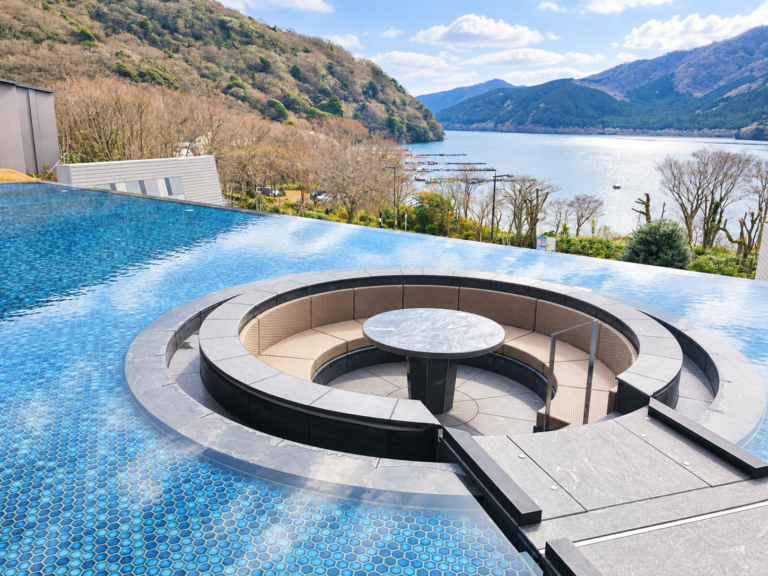
The feel: scenic and tourist-oriented, with the best Mt. Fuji viewing in the region on clear days.
Best for: sightseeing-focused trips. This is where I stayed at Hanaori, which sits across the road from the lake.
A Realistic Word About Mt. Fuji Views
Let me manage this expectation, because a lot of listings lean on it.
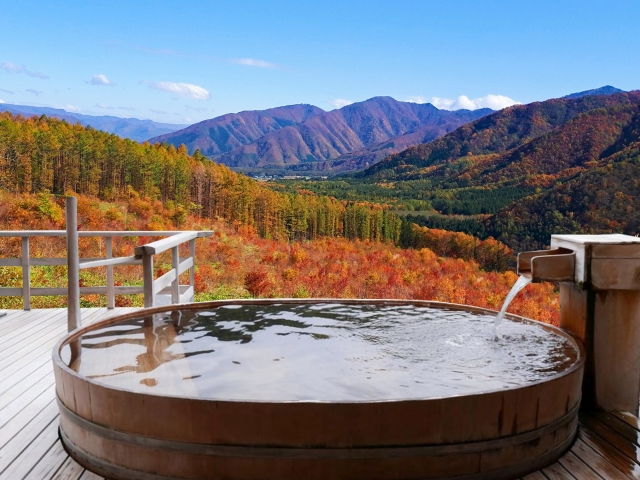
Most Hakone baths have no view of Mt. Fuji at all. The caldera walls block it from the valley floors where most of the springs are. The properties that do have a Fuji view are on the Lake Ashi and Sengokuhara side, at altitude, facing west — and they’re a small and expensive minority.
On top of that, the mountain is often hidden by cloud. Winter mornings generally offer the best chance of a clear view.
So if a Fuji view from the tub is your priority, search specifically for it, expect to pay for it, and accept that the mountain may simply not show up. Hakone’s real strength is the variety of its water and the museums, not guaranteed Fuji views.
How to Read a Spring Before You Book
Here’s a tip almost no foreign visitor uses: every onsen facility in Japan posts a spring analysis (泉質, senshitsu), and many publish it on their website.
Reading it before booking tells you exactly what you’re getting. The main types you’ll encounter in Hakone:
- Simple alkaline springs — clear, mild, skin-smoothing. Yumoto, Tonosawa. Good for beginners.
- Sodium chloride springs — salty, excellent heat retention. Sengokuhara, parts of Gora.
- Sulphur springs — milky white, distinctive smell, associated with skin benefits. Areas near Owakudani.
- Sulphate springs — clear, slightly astringent. Parts of Gora and Kowakidani.
- Bicarbonate springs — soft on the skin, less common in Hakone.
If you have sensitive skin, or a strong preference for a certain type of water, this is worth two minutes of checking. It’s the difference between “we went to an onsen” and choosing the water you actually wanted.
(Note: onsen水 is often described in terms of traditional health benefits. I’d treat those as cultural framing rather than medical claims — enjoy the bath for the bath.)
Day Trip or Overnight?
Day-use baths are widely available. Many ryokan open their baths to non-staying visitors during the day, for a fraction of what an overnight stay costs. Prices vary by facility, so check the current rate before you go. It’s the cheapest way to try a Hakone onsen, and you can fit it into a sightseeing loop.
Staying overnight gets you more: the bath before and after dinner, the early morning soak when it’s quiet, the yukata, the whole rhythm of it. If you can only do one onsen experience in Japan, I’d make it an overnight stay.
If you’re weighing this up, I’ve written a full guide to what to expect at a ryokan.
Getting There and Getting Around
From Tokyo: the Odakyu Romancecar runs from Shinjuku directly to Hakone-Yumoto in roughly 75 to 90 minutes depending on the service. Alternatively, the Shinkansen to Odawara takes about 35 minutes from Tokyo, then you transfer to the mountain railway.
Within Hakone: the classic loop runs Yumoto → Tozan railway → Gora → cable car → ropeway over Owakudani → Lake Ashi pirate ship → bus back to Yumoto. It’s a genuinely good day out.
The Hakone Freepass covers the train, cable car, ropeway, buses and boats. Worth it if you’re doing the loop or moving between areas. Less worth it if you’re heading straight to one inn and staying there.
One practical note I’d give anyone: check which area your inn is in before booking transport. Getting from Lake Ashi to Gora takes longer than the map suggests, and the last connections run earlier than you’d expect.
When to Go
- Autumn (October–November): the most popular season. Foliage, pampas grass in Sengokuhara, and correspondingly heavy crowds and prices. Book far ahead.
- Winter: my quiet favorite. Fewer crowds, lower prices at many properties, and soaking outdoors with cold air on your face is genuinely wonderful. Clear winter mornings also give the best Fuji odds. Pack warm if you’re staying up at Gora or Sengokuhara.
- Spring: cherry blossoms along the Tozan railway are lovely, but expect crowds and premium rates.
- Summer: humid down at Yumoto, more comfortable at altitude.
Practical Questions
Do I need to be naked? In communal baths, yes, that’s standard, and baths are separated by gender. If that’s a hurdle, book a room with a private bath or a reservable private bath. I cover the full rules in my onsen etiquette guide.
What about tattoos? Policies vary by facility and are gradually relaxing, but many places still restrict them. Hakone happens to be one of the better regions for tattooed travelers because it has so many private-bath options, and a few inns explicitly allow tattoos in their communal baths.
How much does a night cost? Ryokan are usually priced per person per night, including dinner and breakfast, which is why the numbers look high next to a plain hotel. Rates vary widely by area, season and room type.
Can I do Hakone as a day trip from Tokyo? Yes, comfortably. The loop plus one day-use bath makes a full day. But you’ll miss the evening and morning soaks, which are the best part.
Where to Start
If you’re planning a Hakone trip and want the short version:
- First onsen ever, want it easy? Stay in Yumoto or Tonosawa. Mild water, short transfer.
- Want quiet and a premium stay? Gora or Sengokuhara.
- Building the trip around sightseeing? Lake Ashi.
- Nervous about communal bathing, or have tattoos? Book a private bath. Hakone has more of these than almost anywhere in eastern Japan.
For specific inns, I’ve put together a roundup of the best ryokan in Hakone with private onsen or private baths, a guide to tattoo-friendly ryokan in Hakone, and a review of Hanaori, the Lake Ashi stay I’ve experienced myself.
Final Thoughts
The thing that makes Hakone worth returning to isn’t any single bath. It’s that the water actually changes as you move around the caldera. Mild and clear at the bottom, milky and sulphurous higher up, salty and warming out on the plateau.
Pick the water first. Then pick the inn. Then work out the trains. Do it in that order and you’ll have a much better trip than the version where you book a nice-looking room and find out afterwards what’s in the tub.