How to Recreate a Japanese Onsen at Home (Step by Step)
Affiliate disclosure: This post contains affiliate links. If you buy through them, I may earn a small commission at no extra cost to you.
You can’t fly to Japan every time your shoulders ache. But you can bring a piece of the onsen home. With the right water, the right minerals, and a few small touches, an ordinary bath becomes something much closer to a Japanese hot spring.
I live in the Kanto region of Japan, where the evening soak is a daily ritual, not a luxury, and the hot springs of Hakone are a short trip when I want the real thing. So this isn’t a list of gadgets. It’s how the bath actually works here, broken into steps you can follow tonight.
What Makes an Onsen an Onsen
Before the how-to, it helps to know what you’re recreating. A real onsen has three things a normal bath usually lacks:
- Mineral-rich water. Natural hot springs are full of minerals, which is a big part of why they feel and work the way they do.
- Genuinely hot water. Onsen run hot, often around 40 to 42°C (104 to 108°F).
- A slow, quiet ritual. The onsen isn’t rushed. The calm is part of the effect.
You can approximate all three at home. Here’s how.
Step 1: Get the Water Temperature Right
This is the step most people skip, and it matters most. A lukewarm bath will never feel like an onsen.
Aim for around 40°C (104°F), a little hotter if you can take it, closer to the real thing. Hot enough that you warm through to your core. But be sensible: don’t scald yourself, and if you have heart or blood pressure issues, or you’re pregnant, check with a doctor before hot soaks.
Keep sessions to 5 to 15 minutes at a time. You can get out, cool down, and go back in, exactly like people do at a real onsen.
Step 2: Add the Minerals
Plain hot water is a start. Minerals are what push it toward onsen territory. This is where your choice of bath salt comes in, and different salts do different jobs:
- Epsom salt adds magnesium, great for sore muscles.
- Dead Sea salt brings a fuller mineral mix, closer to a natural spring, and is gentler on skin.
- Carbonated Japanese tablets (like Kao Bub) release CO₂ bubbles, recreating the fizzing, deep-warming feel of Japan’s carbonated hot springs.
Not sure which to pick? I break down the differences in my guide to Epsom vs Dead Sea vs magnesium flakes, and I rank specific tested products in my best bath salts for sore muscles and an onsen-style soak.
For the most authentic touch, a carbonated tablet is the closest thing to a real onsen you can drop in your tub.
Step 3: Wash First, Then Soak
Here’s a habit that instantly makes your bath more Japanese: wash before you get in.
In Japan, you never wash inside the bath. You clean yourself first, rinse off completely, and then get into clean water purely to soak. So shower or wash beforehand, and treat the bath itself as a place to relax, not scrub. Your soak feels cleaner and more restful this way, and it’s how every onsen works.
Step 4: Add the Onsen Atmosphere
The small touches are what turn a bath into a ritual. None of these are essential, but together they change the whole feel:
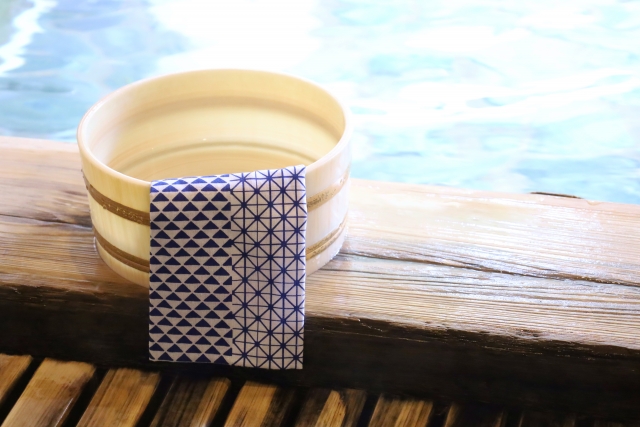
- A wooden element. A hinoki (Japanese cypress) bath bucket, stool, or a bit of hinoki bath essence brings the scent of a real onsen. I cover options in my guide to hinoki bath products.
- Dim the lights. Bright bathroom lighting kills the mood. Lower it, or use a candle.
- Silence or soft sound. No phone, no scrolling. Quiet is part of the point.
- A cool towel for your head. The classic onsen move. Rest a small folded towel on your head while you soak.
- A seasonal touch. In winter, Japanese baths sometimes float yuzu citrus. It smells wonderful and is easy to try at home.
Step 5: Cool Down and Hydrate
An onsen visit isn’t one long soak. It’s soak, cool, repeat. So get out when you feel warm through, sit and cool down, then go back in if you like.
And drink water. Hot mineral soaks dehydrate you more than you’d expect, so have a glass before and after. This is exactly what people do at real hot spring resorts between baths.
Common Mistakes to Avoid
A few things that stop a home bath from feeling like an onsen:
- Water too cool. The single most common miss. Get it properly hot.
- Soaking too long in one go. Long, uninterrupted soaks leave you lightheaded, not refreshed. Break it up.
- Washing in the bath. Wash first, always. Soaking in your own wash water is the opposite of the onsen idea.
- Skipping hydration. You’ll feel drained instead of restored.
- Rushing it. The calm is doing half the work. Give yourself the time.
Bringing It All Together: A Simple Onsen Night
Put the steps together and here’s your evening:
- Wash and rinse fully.
- Run the bath hot, around 40°C.
- Add your minerals, Epsom, Dead Sea, or a carbonated tablet.
- Dim the lights, silence your phone, cool towel on your head.
- Soak 5 to 15 minutes, cool down, repeat.
- Drink water, and let yourself slow down.
That’s a real onsen ritual, minus the plane ticket.
FAQ
Can you really recreate an onsen at home? Not exactly, since you can’t replicate a specific natural spring’s water. But you can get remarkably close on the parts that matter most: hot mineral water, the wash-first habit, and a slow, quiet ritual.
What’s the most important part? Water temperature. A properly hot soak is what separates an onsen feeling from an ordinary bath. Everything else builds on that.
Which bath salt is closest to a real onsen? A carbonated Japanese tablet like Kao Bub comes closest to the sensation of a carbonated hot spring. For a mineral-rich soak, Dead Sea salt is a strong choice.
Final Thoughts
You don’t need a trip to Japan to feel a bit of the onsen. Get the water hot, add the right minerals, wash before you soak, and slow the whole thing down. Do that a few nights a week, and the bath stops being a chore and becomes the calmest part of your day.
That, more than any single product, is what the Japanese bath is really about. And it travels surprisingly well.
Ready to plan the real thing? See my guides to [onsen etiquette for first-timers] and [what to expect at a ryokan].